Environmental Roots of Urban Inequality
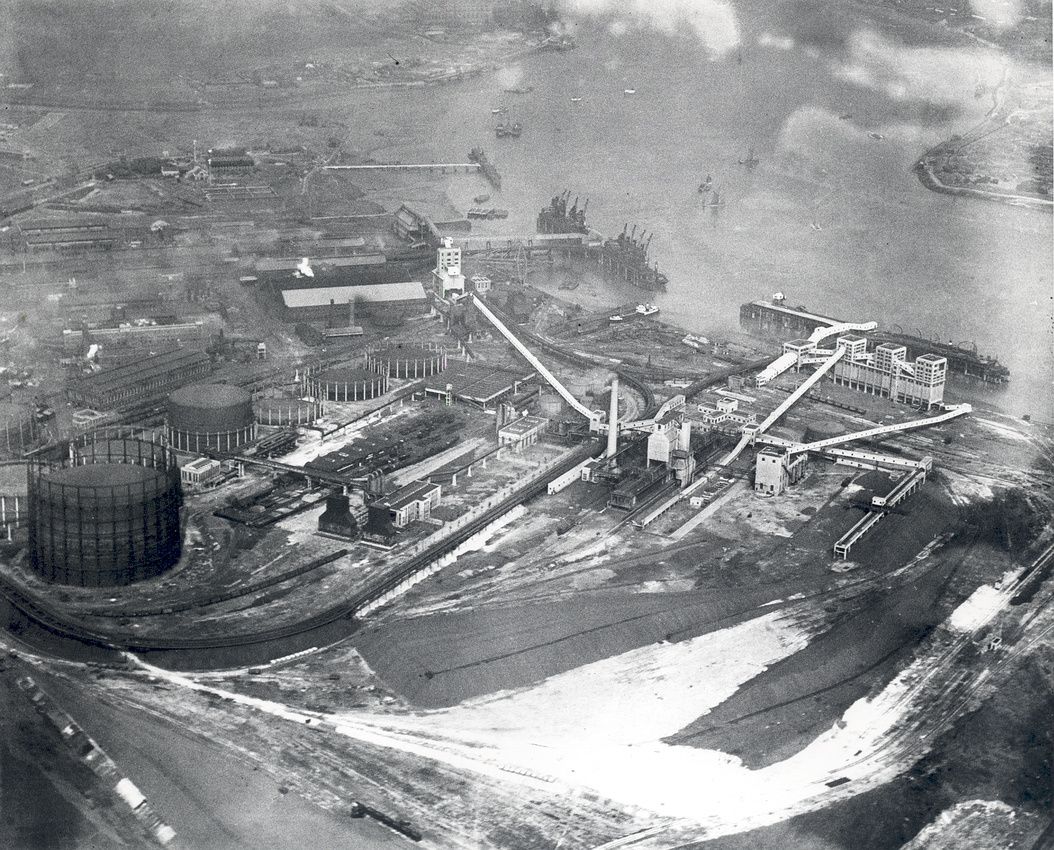
My primary research investigates long-term processes of social-environmental change in cities. It responds to a structural division between urban and environmental theory: With few exceptions, research on urban environments relies on hazardous site data produced since the 1980s, severely limiting longitudinal research. In response, I develop original methods to understand industrial transitions in urban contexts and to connect environmental data with population measures at multiple spatial scales (see this article on my novel machine learning approach to analyzing archival data, as well as this chapter on ML methods and large-scale data in urban research). I use these original data to conduct the first comparative analysis of social-environmental change in the late 19th and early 20th centuries, which finds that the racialization of environmental risk emerged alongside and in relation to the initial formation of segregated and unequal neighborhoods (see this article in Social Forces, as well as this article in Socius). This research demonstrates that interlocking social and environmental change are central to the formation of spatial inequality and that understanding industrial transitions is a necessary window into this process. Building on Du Boisian understandings of the coproduction of race and environment, my work argues that US cities must be understood through a general theory of environmental racialization, such that place stratification came to be structured through a relational process that gradually tied racial marginalization to environmental risk.
In revealing new information on large-scale environmental hazards that are absent from state and federal tracking efforts, my work additionally emphasizes the utility of computational social science to create important new data for policy research.
Supported by the National Science Foundation SEEKCommons Project (NSF FAIROS RCN Award 2226425).
Related publications
Tollefson, J. 2026. “Environment and the racialization of space in US cities.” Social Forces (online first).
Candipan, J. and Tollefson, J. 2024. “Machine learning and large-scale data for understanding urban inequality.” The Oxford Handbook of the Sociology of Machine Learning, edited by C. Borch and J.P. Pardo-Guerra. Oxford, UK: Oxford University Press.
Frickel, S. and Tollefson, J. 2022. “When environmental inequality racialized: Historical evidence from Providence, Rhode Island.” Socius 8:1-14.
Tollefson, J., Frickel, S. and Restrepo, MI. 2021. “Feature extraction and machine learning techniques for identifying historic urban environmental hazards.” PLoS ONE 16(8): e0255507.
Tollefson, J. and Frickel, S. 2021. “Gasworks, lost and found.” Urban Omnibus. New York: Architectural League of New York. July 1.
Tollefson, J. 2023. “Redlining and segregation in Providence, RI.” Essay for Mapping Inequality. Richmond, VA: University of Richmond Digital Scholarship Lab.