Socio-Ecological City Project
This area of my research focuses on localized processes of social-environmental change in cities over the course of the 20th century. Two projects, conducted with the Community Engagement Core of the NIEHS Superfund Research Program and the Rhode Island Department of Health, analyze the interaction between urban greening and postindustrial abandonment (see this article in City & Community) and the multiplicative effects of race, ethnicity, and language of instruction on environmental health risk in early childhood education settings (see this article in Environmental Justice). Together, these projects reveal how complex interactions in different forms of urban land use and iterative population change reshape local structures of inequality over time, with important implications for racial, environmental, and health justice.
Related publications
- Tollefson, J., Frickel, S., Gonsalves, S., and Marlow, T. 2023. “Parks, people and pollution: A relational study of socioenvironmental succession.” City & Community (special issue: Environmentalizing Urban Sociology) 22(4): 286–307.
- Tollefson, J., Frickel, S., Gonsalves, S., Marlow, T., Sucsy, R., Byrns, M., and Orpen-Tuz, M. 2023. “Early childcare and education in a post-industrial landscape: Inequalities in exposure to active and relic manufacturing in metropolitan Providence, Rhode Island.” Environmental Justice 16(4): 309-320.
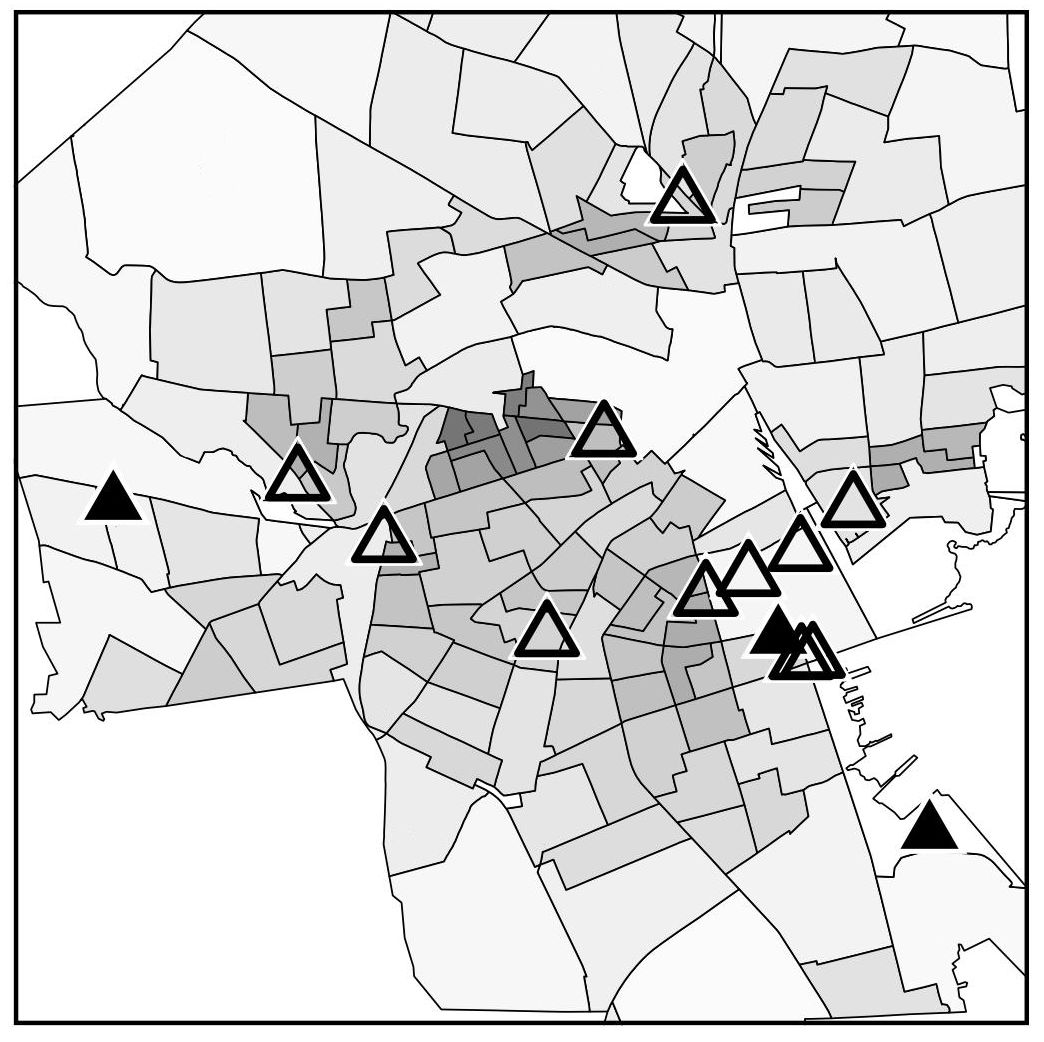
These projects build on a wide array of longitudinal spatial data on the industrial, environmental, and social history of the Providence, RI area, collected by myself, collaborators, and colleagues. Explore some of these data below ↓
Data sources
- Manufactured gas: Tollefson, J., Frickel, S. and Restrepo, MI. 2021.
- Hazardous businesses: Bell et al. 2019.
- Manufacturing: Marlow, T. and Frickel, S. 2018; see also Marlow, T., Frickel, S., and Elliot, J., 2020.
- Community gardens: Gonsalves, S. 2020.
- HOLC maps: Nelson, R.K, Winling, L., et al 2023.
- SIR sites: RI Department of Environmental Management.
- Air monitoring locations: Hastings and Frickel.